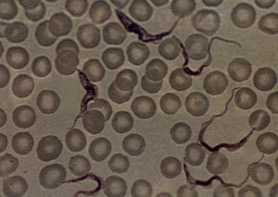
Sleeping Sickness
(African Trypanosomiasis)
 Sleeping sickness, also called African trypanosomiasis, is a serious parasitic disease that is fatal without treatment.The disease is spread by the bite of the tsetse flies, found only in Africa. East African trypanosomiasis is caused by the parasite Trypanosoma brucei rhodesiense. West African trypanosomiasis is caused by Trypanosoma brucei gambiense. Although the East African version of the parasite differs a little from the West African version, we will talk about the common characteristic of both parasites in this project.
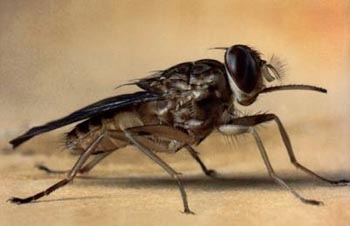 |
| Tsetse flies, such as this one, carry the deadly tripanosomiasis disease. Credit |
Humans get sleeping sickness from the bite of the tsetste fly. A bite by the tsetste fly is often painful and can develop into a red sore, called a chancre. The fly delivers the African Trypanosomiasis parasites into the human blood stream, and the parasites begin the infection. The size of the parasite is small. Its unicellular structure allow it to travel freely in the human body. As a result, the parasite develops in the lymph and blood of the patient and can travel up to the central nervous system.
The parasite then causes symptoms which symptoms occur several weeks to months later. The symptioms include include aching muscles and joints, body rash, extreme tiredness, fever, irritability, severe headache, swelling around the eyes and hands, and swollen lymph glands. Some subjects develop swollen lymph glands on the back of the neck.Weight loss occurs as the illness worsens. Many patients sleep for a long time during the day and have trouble sleeping at night. Infection of the central nervous system causes confusion, increased irritability, loss of concentration, personality changes, seizures, slurred speech, and difficulty in walking and talking. If left untreated, death can occur within several weeks to months.
Trypanosomiasis can be diagnosed by laboratory tests on blood and spinal fluid. Patients need to be hospitalized for treatment and require periodic follow-up exams for 2 years. Despite the availability of treatment, vaccines or drugs to prevent the disease have yet to appear.